
Swing axles defended…

Posted on July 24th, 2007 in Opinion,Suspension,Tyres by Julian Edgar

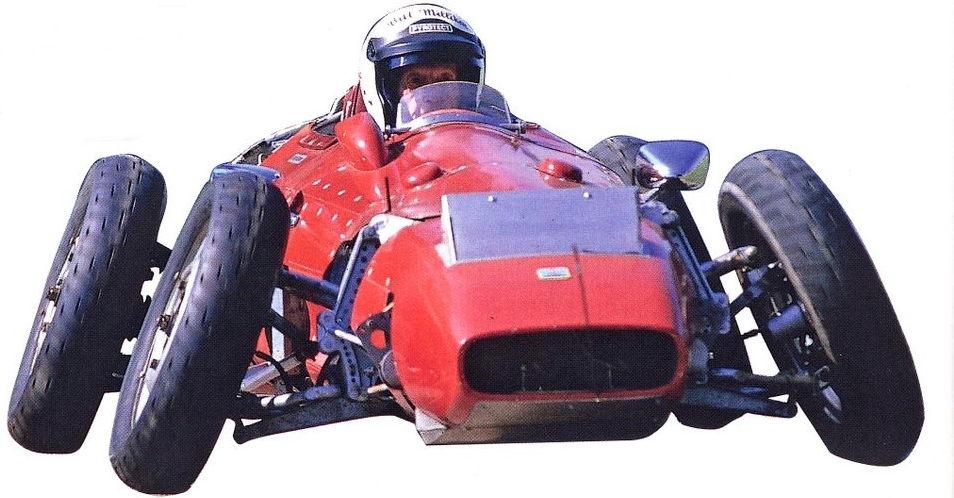
milliken-car.jpgI’d no sooner finished writing A Disappearing Suspension Technology than I came across something that goes a long way to explaining the reason that swing-arm suspension was used by such hugely respected engineers like Porsche and by companies like Mercedes.

The magazine article is on a very interesting car produced by one of the all-time greats in suspension theory. The designer of the car was Bill Milliken and the premise was that by using narrow tyres running a huge amount of negative camber, very good cornering grip would be able to be obtained.

Now there’s a lot more to his car than just that (by clicking on the magnifying glass you can enlarge the article scans enough to print/read them) but the narrow tyres/huge neg camber is a very short summary.

The tyres being used by Auto Union and Mercedes pre-WWII race cars were similar in width to current big motorcycle tyres and so would have been far less susceptible to loss of grip through lifting of the flat tread of the tyre that would otherwise occur through negative camber. In fact, the lateral thrust from the camber achieved by the swing-arms would, as the Milliken car shows, have made a major contribution to cornering grip.

It makes me think that a lightweight car running low pivot point swing-arm (or semi-trailing or leading) suspension and motorcycle tyres could develop a lot of grip while maintaining an ultra lightweight suspension, in turn giving a very low unsprung weight and low total vehicle mass. And the narrow wheels and tyres would also give far lower rotating inertia, improving acceleration and braking still further…

Suspension behaviour, the VE Commodore and hybrids
Posted on July 14th, 2007 in Hybrid Power,Opinion,Suspension,Technologies by Julian Edgar

107787_4mg.jpgThe other month I found myself commuting 160 kilometres each day, most of that on two, three and four lane freeways. When everyone’s travelling at basically the same speed, it’s an ideal opportunity to look at the suspension behaviour of other cars. For several kilometres of bumps, you can literally eyeball from close quarters the front or rear wheels of a car travelling at 100 km/h.

One of the interesting things is watching the front dynamic camber variations. Theory says that you want a neg camber increase in bump, primarily to keep the outside, loaded tyre closer to vertical as the car rolls. But theory also says that this dynamic camber increase is pretty well impossible to achieve with MacPherson strut suspension, unless the steering axis inclination is radical (which in turn brings other problems).

And can’t you just see it in action when you watch adjoining cars!

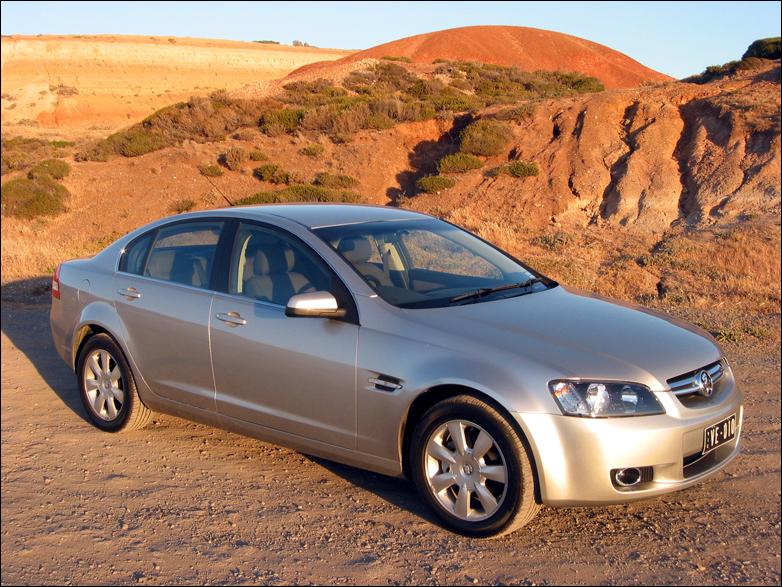
On my local roads, the (pre VE) Commodores and nearly all Japanese and European small cars have front wheels that just move up and down. But watch a Falcon, or any of the European cars with double wishbones, and you can see clear dynamic camber variations.

And the same thing applies at the back, except this time the wheels just moving up and down are those connecting to torsion beam rear axles (FWD cars) or solid rear axles (RWD cars). On cars with multi-link or wishbone suspensions, the camber change is quite obvious to the eye. Of course I’m not talking about much variation – perhaps a few degrees. But you can still see it.

A different sort of road safety campaign

Posted on June 30th, 2007 in Opinion by Julian Edgar

1244_4mg1.jpgOver the last two or three decades we’ve seen just about every driver road safety campaign possible.

From overt blood and guts to more subtle psychology.

From a big stick to a plaintive plea.

From massive enforcement of laws never originally designed to be policed with such technology (technology that’s so superior to that of cars that manufacturers deliberately build in conservative speedos lest they be caught out), to changes in social norms that are quite radical to experience in just half a generation.

But one of the primary causes that I see of accidents is relatively little mentioned: the concept of driving to the conditions.

To toe-in or toe-out on bump?

Posted on June 16th, 2007 in Opinion,Suspension,Technologies by Julian Edgar

0913_11mg.jpgNow forgive me if this seems pretty esoteric: it probably is. In fact, I’d never really even thought about it until a year or so ago; I’d never actually experienced it until today.

Most of you would be familiar with the idea of ‘toe’. Toe-in is where the wheels point inwards – when viewed from above, they’re constantly steering towards the centreline of the car. Toe-out, as you’d soon guess, is where the wheels are constantly steering outwards from the centreline. Zero toe means the wheels are parallel to the centre line.

Most cars these days run zero toe or just a very small amount of toe-in. Toe, usually measured in millimetres (although degrees would make far more sense), is at most only 1 or 2mm: the amount the wheels steer inwards or outwards is very small indeed.

OK – so that’s static toe. But what about when the suspension moves up and down?

If, during suspension travel, the wheels stay steering exactly in the directions they were originally steering in, the suspension is said to have zero bump steer. If the wheels steer inwards on bump, they’re said to have toe-in on bump. Toe-out on bump is defined as you’d expect it to be. (Note that in all these quoted cases, the steering wheel is held still – it’s the suspension itself that’s doing [or not doing] the steering.)

Weight and per person fuel consumption

Posted on June 2nd, 2007 in Opinion by Julian Edgar

2591_7mg.jpgAny vehicle designed to transport people must move two masses – the mass of the vehicle itself and the mass of the people and/or goods it is carrying.

So a bicycle, the most efficient means of transporting just one person, has (say) a total mass of 100kg, of which 85kg (so 85 per cent) comprises the load being carried. (A skateboard does even better.) A Holden Calais weighs 1700kg to carry about 450kg – or to carry 21 per cent of the total mass. A Peugeot 206 GTi has a mass of 1050kg and can carry probably about 350kg, or about 25 per cent of the total.

But these are theoretical maxima.

What if there’s just the driver in the Calais? Then the mass being carried is just 4.5 per cent of the total vehicle weight! More than 95 per cent of the weight moving along the highway is not the primary load being transported!

Even in the lightweight Peugeot, a single person aboard will still mean that 93 per cent of the mass being moved is not the load.

Rear wheel drive can be dangerous

Posted on May 19th, 2007 in Handling,Opinion,Suspension by Julian Edgar

108569_7mg.jpgI think this (apparently uniquely Australian) idea that big family cars need to be rear wheel drive is simply rubbish. You hear it all the time – rear wheel drive is best for towing, rear wheel drive is best for handling, rear wheel drive is somehow hugely superior over front wheel drive. Well, apparently it is for the macho Australian male, anyway.

From the day I first bought a car I have never been a believer in the philosophy; in the time since I’ve owned rear wheel drive, four wheel drive and front wheel drive cars – and I have remained unconvinced. In fact, if anything, I think I am leaning heavily in the direction that rear wheel drive, without traction control (or better still, stability control) is potentially bloody dangerous.

Today is a perfect example. I’d bought a big workbench on eBay – and this morning I had to go pick it up. The thing is enormous – much too big to fit on my normal 6 x 4 trailer. So I organised the hire of a car carrying trailer. When the alarm went off at 5.45 am (pick-up was set for 8 am) I awoke, listened for a moment, and then my heart sank.

It was raining.

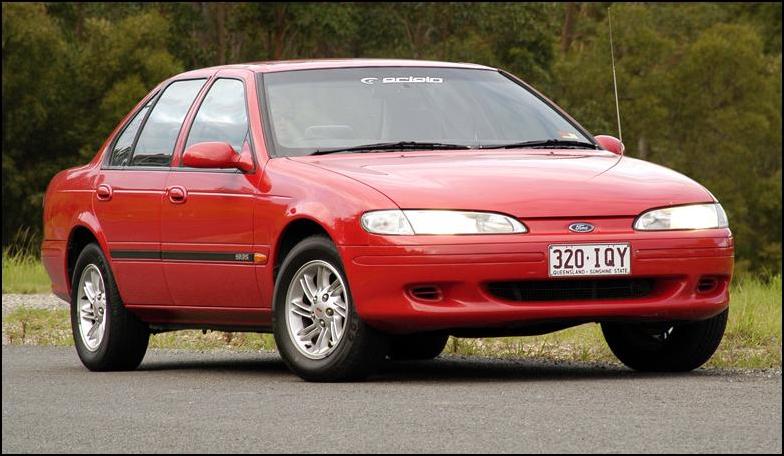
I needed to go down the narrow, tortuous road from the mountain on which I live, pick up the huge trailer, then drive straight back up the mountain, descending the other side on an even tighter, narrower road. All in Frank the EF Falcon, a car which even without a trailer hooked on the back, power oversteers around these wet and slippery corners even when you’re trying to drive gently. Perhaps it’s the tyres – and the rears are certainly down in tread although still quite legal – or perhaps it’s the sheer torque and throttle response of the 5-speed manual Falc. But either way, it’s a car that in the wet needs to be treated with an incredibly judicious right foot. Even when you’re not towing a huge trailer with a 300kg workbench strapped to it.

AutoSpeed changes…

Posted on May 5th, 2007 in Opinion by Julian Edgar

Back in November 2006 we foreshadowed some major changes to AutoSpeed.

We said that there’d be more DIY hands-on tech. There’d be more stories on the background engineering of cars and their technology. We said we’d be driving more cars – both new and used – and we’d be doing less stories on modified cars high on bling and nothing else. We said we’d be modifying a mainstream and cheap project car – an EF Falcon six cylinder – and we’d be adding instant reader voting for each story. Finally, we said we’d be re-presenting previously run stories, primarily because the vast majority of current readers had never seen them (and in return, we were extending current subscriber periods to take into account the reduced new content).

And, with one exception, we’ve done all of that. We’ve run more hands-on stuff; we’ve run heaps of background stories on car engineering; we’ve covered the Falcon modifications including brakes, extractors, exhaust, cam, engine management, air intake – and now we’re doing the suspension. All nitty gritty, real world stuff, photographed in huge detail.

And the exception? We’ve driven less cars than I wanted to.

The announcement of change was greeted with near universal acclaim by you, our readers. And those changes have been very successful at bringing new readers to AutoSpeed – compared with October last year, last month our visits were up by 16 per cent and our page views increased by a whopping 31 per cent.

Real world family car driving

Posted on April 21st, 2007 in Mitsubishi,Opinion by Julian Edgar

2960_6mg.jpgIt seems like only yesterday that the Mitsubishi 380 was released, but time is no friend to a car company – not when the Toyota Aurion and VE Holden Commodore have both since seen the light of day. Throw in the still highly competitive Ford Falcon and the pretty-well-just-as-big-inside Toyota Camry – and of course the highly impressive Hyundai Sonata V6 – and you have what can only be called a very difficult market for the Mitsi. Not to mention the fact that public uncertainty over the future of the local manufacturing plant has assumed almost TV soap opera proportions…

The result is not unexpected: at the time of writing, you can buy a Mitsubishi 380 with less than 10,000km on the clock for under AUD$24,000. Expect that to soon dip below $20K – and for a fearful rate of depreciation to follow. To put this another way, if you expect to keep a car for a long time (say 10 years), you can now step into a fast, excellently handling, and near new family car for what can only be described as an astonishing bargain price. Well, that’s what I think the car is.

But what’s it actually like in a family role, child seat in the back and mostly doing the humdrum duties of urban travel and shopping centres, with just an occasional longer country trip thrown in? My wife, Georgina, recently spent three weeks in a 380 ES 5-speed auto, a car with 30,000km on the clock. She drove the car with Alexander, 2, in the back. Georgina normally drives a Toyota Prius and has driven the current Sonata, Falcon, Commodore, the last of the Magnas, and many other cars.

Here are her comments.

Julian Edgar

An article that rated badly

Posted on April 7th, 2007 in Opinion by Julian Edgar

107829_4mg.jpgAs most of you would know, we now have an instant reader feedback facility for every article. The system, which appears only for AutoSpeed subscribers, allows you to vote on a 1 – 5 scale, with ‘1’ at the bottom of the barrel and ‘5’ at the top.

On most days I look at the results once or twice – obviously not for every article but for the most recent. In general, the scores pretty well match what I expect. That’s not to say I can predict the results perfectly, but I knew that John’s Jet would be popular (it’s our highest rating article ever) and that, for example, Negative Boost Revisited, Part 1 would be relatively unpopular (cos it’s the first in a long series, and is for many people, just background material).

Subscriber article ratings that have really surprised me by how high they rate are mostly those to do with hybrids – Prius vs Insight and Diesel Hybrid! are two.

Of course (or perhaps not of course: I have been looking at readership stats for a long time), external readership numbers are often completely out of keeping with subscriber ratings; to bring new readers to AutoSpeed as well as keep current readers relatively happy, I need to keep a weather eye on both sets of data.

But one article that has really concerned me in its subscriber rating is How Heavy’s Your Knob?. As I have mentioned before, I thought this article was a really good one. Why? Well (1) it covered a modification technique I have never seen mentioned elsewhere; (2) it was very cheap; (3) it was very easy; (4) it was very effective.

Power to move

Posted on March 24th, 2007 in Opinion,Power by Julian Edgar

108228_2mg.jpgThe other day when I had Frank the EF Falcon on the ChipTorque dyno, I did something pretty interesting. But first, some background.

I’ve installed in the Falcon the trip computer that’s normally fitted to higher trim models. It displays all the usual trip computer stuff – average fuel economy, average speed, and so on. It also displays instantaneous fuel consumption.

From watching this display a lot, I know that at an indicated 110 km/h on a level freeway (actually 105 km/h when a speedo correction is applied), the instantaneous fuel consumption figure fluctuates between 7 and 8 litres/100 km. (Unfortunately, the instantaneous display doesn’t have any decimal places.) Over a long distance in these conditions, the average is 7.5 litres/100 – so that instantaneous number makes sense.

On the dyno it was easy to dial up an indicated 110 km/h and then increase the load until the instantaneous consumption figure was fluctuating between 7-8 kilometres/100. Then it was just a case of reading off the dyno screen how much power was being absorbed at the wheels. The answer was 13kW.

So, in the Falcon, it takes 13kW to propel the car along level ground at an actual speed of 105 km/h.