
Welcome to the Autospeed Blog. Use of this site must adhere to our terms and conditions.

Beginnings of a New Workshop

Posted on April 7th, 2008 in Driving Emotion,Opinion,tools by Julian Edgar

Today it’s been rather hard to concentrate on work.

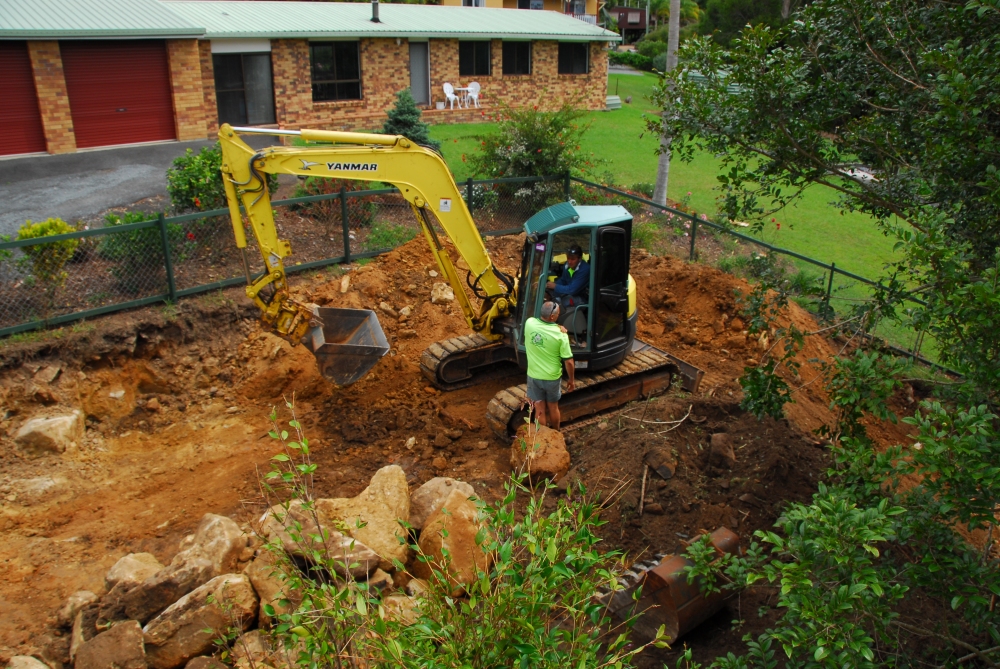
Instead of the sounds of birds, my home office has been filled with the noise of an excavator working in the front garden. The roar of the diesel; the grinding of its scoop teeth on rocks; the clatter as the driver changes buckets.

After living in this house for about eight years, I am finally having a decent workshop built. The shed is going to be (I hope) 14 metres x 6 metres, a huge area of floor space for my pan-brake, lathe, mill, bandsaw, oxy acetylene – and all the rest of the gear.

That equipment currently resides in the space under my (elevated) house – but that area is not weatherproof and has low ceiling clearance. It’s also not anywhere near 84 square metres in size…

The excavator is smoothing and levelling, creating the pad for the shed. It might be in the front yard but the unusual shape of the block actually tucks it into a space scarcely visible from the road, and on an area of land we seldom – if ever – used. The block is steeply sloped so quite a lot of earthmoving work is needed: today another level was scooped out for a shed rainwater tank, a rock retaining wall was built, and an area was built up and compacted.

New car tests

Posted on April 3rd, 2008 in Opinion by Julian Edgar

Let’s talk about new car tests.


When I first started writing them, about ten years ago, I said to myself that I was not – simply not – going to write wishy washy, shades-of-grey tests.


If the car has good points, I would emphasise them. If the car had bad points, I would emphasise them. I would not do as so many others do, and that is to use trendy, chatty writing to disguise that in fact little was actually being said about what made a car good or bad.


The results of the approach that I have taken has been threefold.


One: some manufacturers no longer lend us cars to test, something I have covered at length previously.


Two: in discussion groups and in emails I cop a lot of criticism – I’m a dickhead, on the payroll of a company, don’t know what I am talking about, don’t understand the concept of the car, and so on.


Three: I am happy with the work I have done, knowing that I have never kowtowed to vested interests to write a report that pulls punches or says nothing much.

Tools…

Posted on April 1st, 2008 in Driving Emotion,tools by Julian Edgar

I loved buying tools and relish for years afterwards their effectiveness. I am not talking tools like spanners and screwdrivers, but things that are much less common.

One example is my tube bender. Small benders for tube and pipe come in two complexions: those that use a hydraulic jack and inside formers, and those that use hand power and inside and outside dies. The hydraulic benders are designed to be used with thick-walled pipe and the latter, hand-operated, designs are for smaller diameter, thin-wall tube.

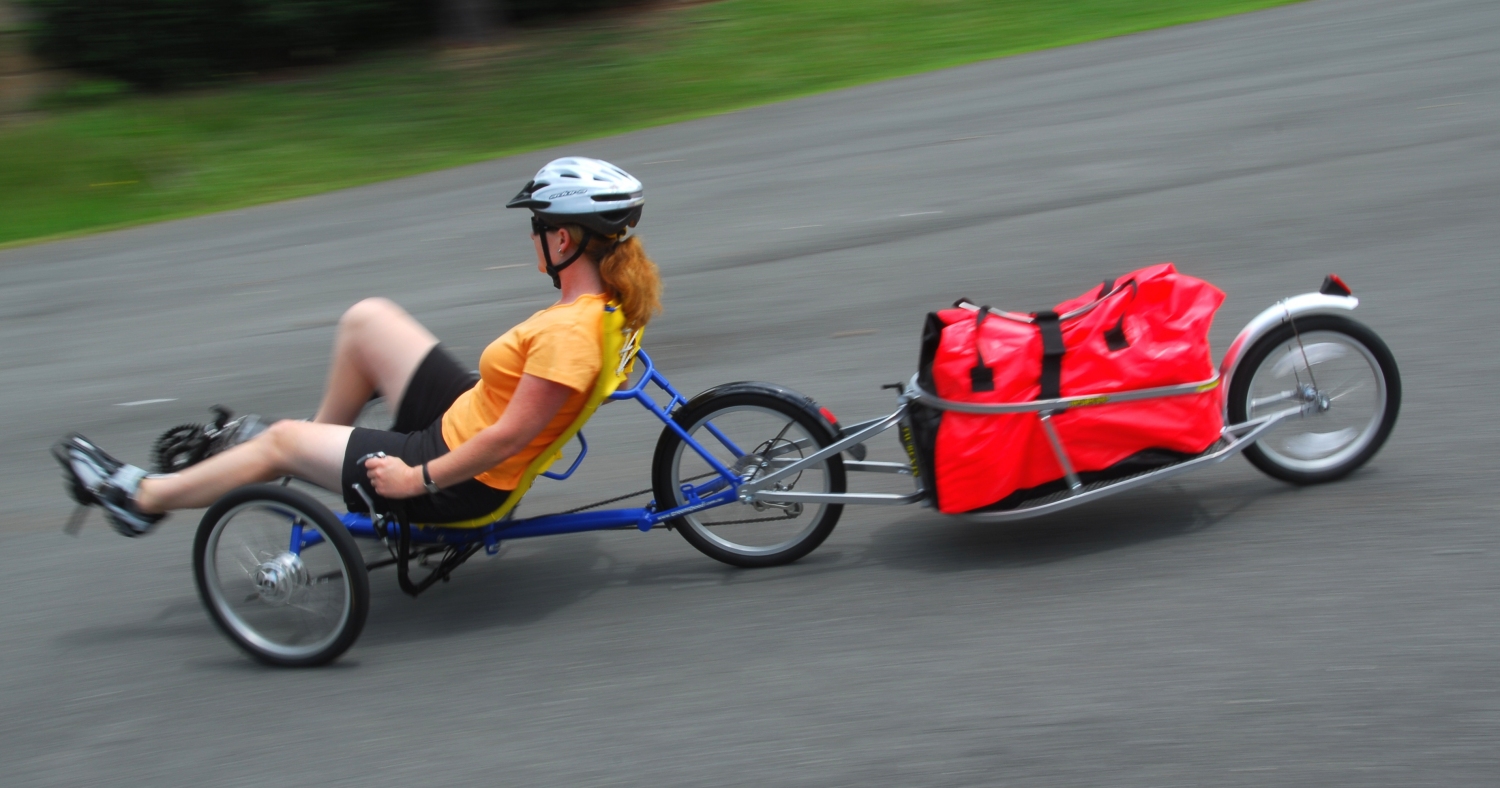
Primarily to help build my recumbent pedal trike, about 9 months ago I bought one of the hand machines. It has dies for 3/8 – 7/8 inch round tube and ¾ – 1 inch square tube.

And, for a cheap machine, it works very well. When bending high tensile 7/8 inch chrome-moly tube (something it’s not meant to do!), I place an extension on its handle to apply greater leverage. However, for smaller tube sizes, the standard handle is sufficient.

Bikes, bikes…

Posted on March 25th, 2008 in Driving Emotion,pedal power by Julian Edgar

gt3trailersmall.jpgMy wife’s business Speed Pedal sells recumbent trikes, folding bikes and bike trailers. Through her work, she often gets to meet people who collect unusual pedal-powered machines. So there’s the man with something like 100 bikes – everything from historic to current, from tandem to single to well… you name it! And another bloke who rides just weird looking machines. Complete with his long flowing beard, on the road he looks an amazing eccentric.

I always figured that was all a bit bizarre, but I now think I am heading in the same direction.

You see, I’ve recently bought two new bikes. And both of them are pretty strange. However, the difference that I have to a collector is that I am buying them only to use, and if I don’t like the machine, I’ll sell it.

To people reared on the traditional diamond framed bike, the fact that other bike designs even exist is a source of surprise. I have previously covered (both in this blog and AutoSpeed) the design and development of my favourite pedal-powered machine – a full suspension recumbent trike.

However, while I love the machine, it has a major disadvantage – it is large and unwieldy to send to distant places.

A genuine breakthrough family car…

Posted on March 20th, 2008 in Opinion,Skoda by Julian Edgar

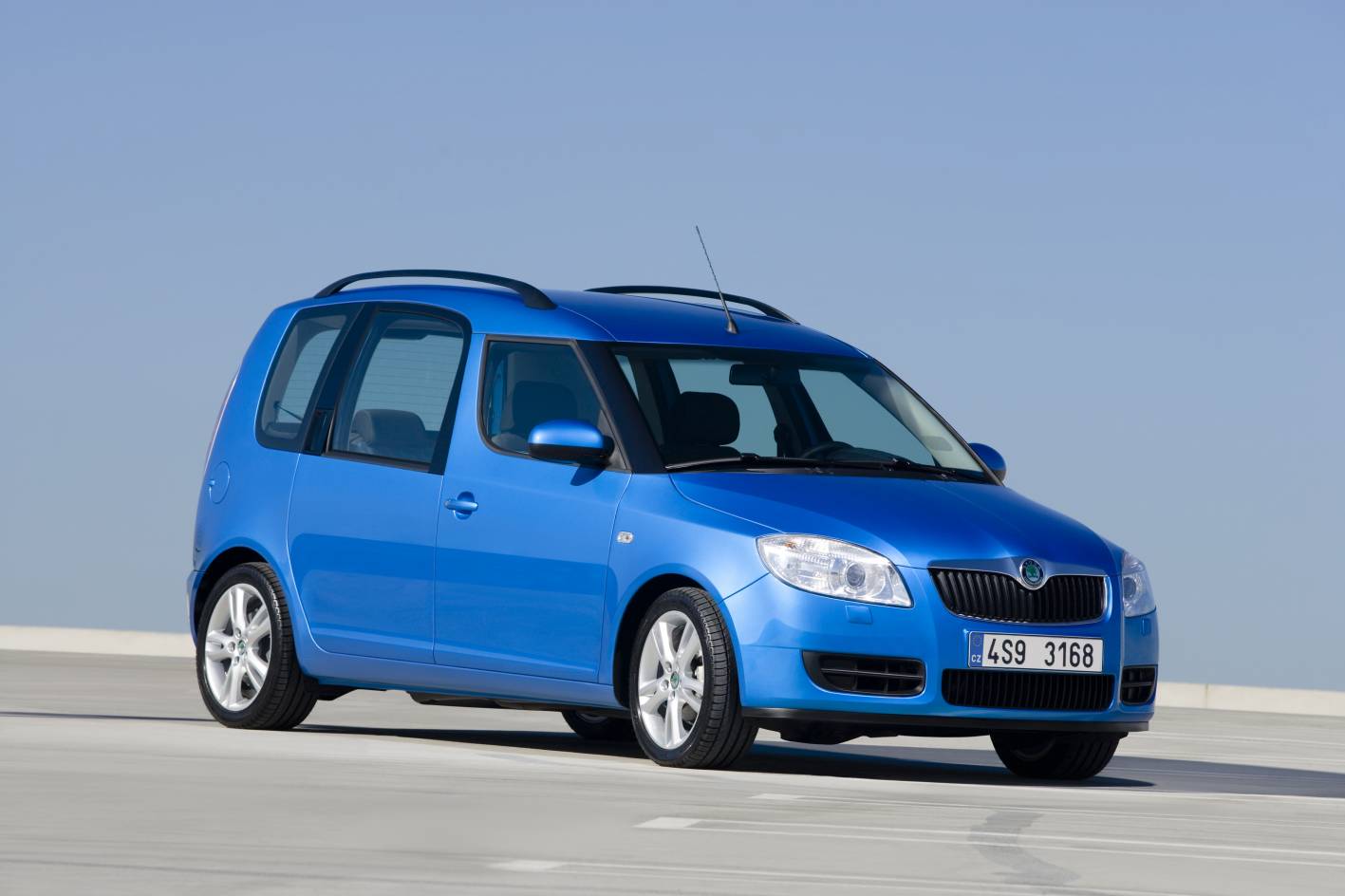
A bit over a year ago I wrote a story that decried the direction new cars were taking.

On important aspects like vision, weight, ride quality and real road handling (the ‘real’ takes into account the width of the car), many new cars are abysmal.

However, in safety, performance and emissions, new cars are undeniably excellent.roomster.jpg

But of course the point is that there’s nothing to stop new cars being safe, performing well and having good fuel economy – and having good vision, ride quality and doing it all at a lower weight.

In the list of deficiencies I should also have mentioned load space and flexibility – there’s been little change for decades. In fact, considering the external dimensions, whenever I get into a big four-wheel drive wagon like (say) a Pajero,  I am astonished at how little interior space there actually is.

The Most Important Article of the Year

Posted on March 18th, 2008 in Driving Emotion,Economy,electric,Hybrid Power,Opinion,Technologies by Julian Edgar

Unusually, in this blog I want to refer you all to the AutoSpeed article that was published today. As I have written above, I think it’s probably the most important article that we’ll publish this year.

So what’s it about?

In short, the article is based on a paper written by Dr Andrew Simpson when he was working for the Sustainable Energy Group at the University of Queensland. His paper looks at a huge number of alternative fuels and drivelines, concluding which are the best from both energy efficiency and greenhouse gas emissions perspectives.

Andrew has given us permission to use major excerpts of the paper, and in fact went through it again to ensure that his conclusions are current. The full paper can be downloaded from the link at the end of the article.

His is a detailed ‘well-to-wheel’ study, where the environmental costs of producing the fuel and the efficiency of the cars using them are evaluated. Even better, they’re all benchmarked against a real car, the Holden Commodore. Even better again, the alternative fuelled cars are modelled to have the same range and performance as the Commodore.

Bridges that collapse…

Posted on March 11th, 2008 in Driving Emotion by Julian Edgar

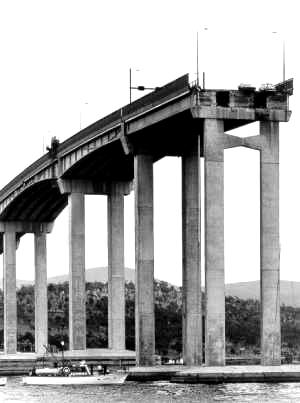
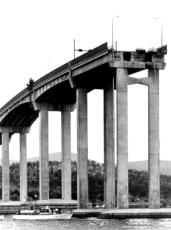
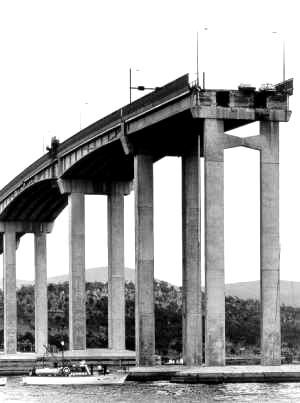
tasman-bridge-diaster.jpgThe idea that some bridges collapse is fascinating: when I cross the largest bridges in Australia – Sydney’s wonderful and famous Harbour Bridge, the Gateway Bridge in Brisbane, Melbourne’s Westgate Bridge and the Tasman Bridge in Hobart – I can only rarely suppress a primeval shudder.

Why? Because I am always waiting for the damn thing to fall down.

tasman-bridge-diaster.jpg

And after all, three spans of the Tasman bridge collapsed in 1975 when the bulk ore ship MV Lake Illawarra struck two pylons. Five occupants of cars crossing the bridge were killed, and the ship – with massive sections of concrete lying across her – sank, killing all seven crewmembers.

And, while it was being built, a 135-metre section of the Westgate bridge – the bit weighing 2000 tonnes – fell to the ground, killing 35 of the workmen involved in its construction.

granville.jpg

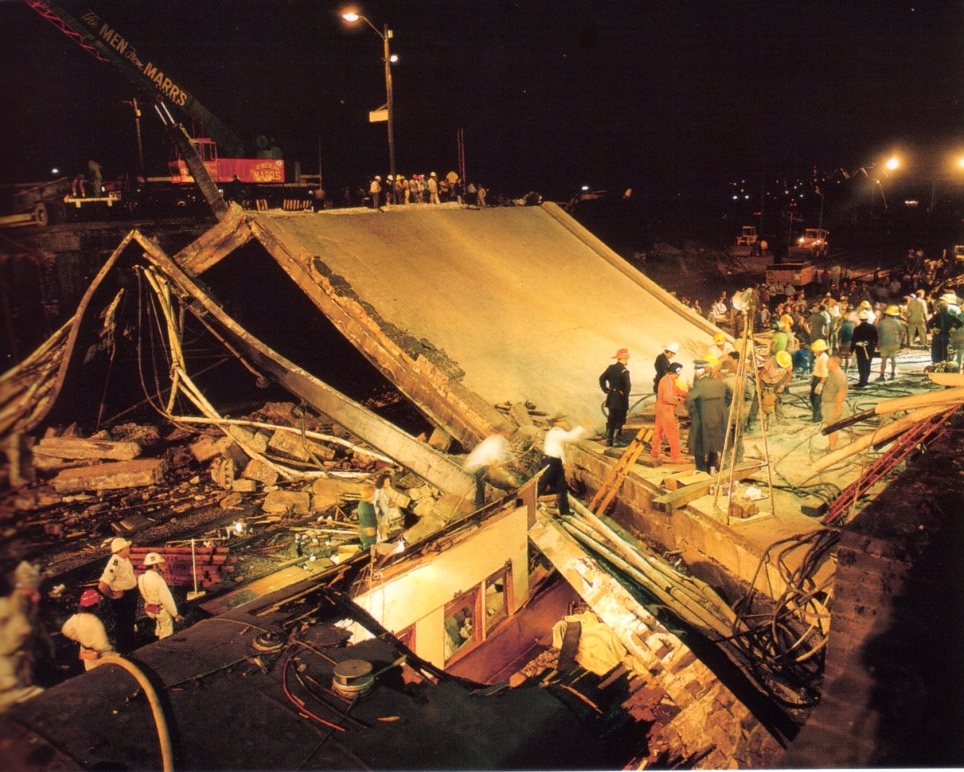
Then there’s the Bold Street bridge in Granville, Sydney, which collapsed after being impacted by a derailed train passing beneath. Eighty-three people died when the four-lane concrete bridge – weighing 570 tonnes – fell on the railway carriages.

So perhaps it’s not so odd that I don’t have quite the implicit faith in bridges that others seem to have.

The Australian bridges didn’t fall down because of inadequate design (perhaps the Westgate disaster excepted) or maintenance. Nope it took ships or trains running into bridge supports to cause the collapse of magnificent, finished structures.

Muffler Design

Posted on March 4th, 2008 in Driving Emotion,Economy,Power by Julian Edgar

While car modifiers talk endlessly about exhaust systems, there is surprisingly little hard information about the design of exhausts, especially mufflers.

That’s why I was particularly interested to come across the text that follows, contained in – of all things – a book on corrosion of cars, published exactly 50 years ago. The chapter, by H. Silman of Electro-Chemical Engineering, is a great summary of exhaust muffler design.

The automobile exhaust system consists essentially of three parts:

(1) the exhaust manifold, which collects the discharged gases from the exhaust ports and conveys them by means of a pipe at least one-quarter of the diameter of the cylinder to the silencer,

(2)  the silencer, and

(3)  the tail pipe, which leads the gases to the rear, the side, or more rarely to the top of the vehicle.

Sometimes twin parallel exhaust systems are used, especially with multi-cylinder engines, whilst it is also becoming increasingly common for two silencers in series to be fitted, the second and shorter unit being located immediately before the final outlet.

The exhaust gases leave the cylinders of an automobile engine at a pressure of around 60-80 lb. per sq. in. and with a velocity of up to 150 ft. per sec. This results in a considerable volume of noise, which must be reduced sufficiently to make the vehicle inoffensive to the driver and passengers, and to the public at large. This legal requirement is achieved by allowing the gases to expand into a silencer chamber, where the intermittent and violent discharges of gas are broken up and emerge from the tail pipe as a continuous and relatively uninterrupted stream.

There are various designs of silencer, but they usually contain a number of baffles carefully designed to avoid excessive back pressure, which might result in a loss of power and overheating of the engine. There is always some loss of power resulting from the use of a silencer, but this need not exceed about 3% with a well-designed unit.

Broadening test horizons…

Posted on February 26th, 2008 in Driving Emotion,pedal power by Julian Edgar

I’ve just returned from an interstate holiday. Originally from South Australia, my wife and I recently flew back to that state for ten days.

In addition to catching up with family and friends, I also wanted to do some riding. I broke-down my self-built, recumbent, full suspension, pedal trike so that it could be placed in a box for freighting the thousands of kilometres. Because I didn’t want to spend a lot of time reassembling, the box was pretty bloody large.  The cost of interstate freighting was not inconsiderable – but I am still very glad I took the trike.

My home Queensland terrain comprises steep and fairly rough bitumen roads. Most of the roads have no gutters – they’re rural and semi-rural roads. I might be inching my way up a 15 per cent grade one moment, pedalling in bottom gear – and then barrelling down the other side in 81st gear the next. I think the roads are very demanding of recumbent trikes: in fact, it was unhappiness with a commercial non-suspension trike that caused me to start to build my own machines.

A solar house electronic control system!

Posted on February 22nd, 2008 in Opinion by Julian Edgar

The other day I was looking at energy-efficient house designs.

Not having looked at off-the-shelf designs for quite a while, I expected to see plenty of houses integrating technologies that have been known for decades (and in some cases, centuries!); technologies like the use of wide eaves, northerly-facing windows (in our Southern Hemisphere), large thermal mass, solar-forced ventilation and so on. However I was amazed to see how few mainstream Australian builders appear to have any idea of these fundamentals of architecture.

Thinking about these aspects of energy-efficient house design reminds me of a building that I once constructed. Well, perhaps ‘building’ is a term with too much weight.

In fact it was a cat kennel.

Cat kennel? Yup – and the cat loved it. 

Designed specifically to provide a measure of solar winter heating, it comprised an insulated double storey timber dwelling, fronted top to bottom with a pane of glass. The cat didn’t have access to the lower storey – instead, that area was completely taken up by a 20-litre (5-gallon) steel drum, filled with water and painted black. The drum sat on some bricks, which were also painted black. The water and bricks gave the 1-metre high building substantial thermal mass.